- Exercises
- Back and core
- Thread the needle
Thread the needle
Thread the needle is a hands-and-knees stretch where you slide one arm under your body and let that shoulder lower toward the mat. It turns your upper back and stretches the back of your shoulder, one side at a time.
Also called Thread the needle stretch, Parsva balasana.
- WorksBack and core
- You needMat
- LevelBeginner
- TryA sample amount: 5 slow reps on each side, pausing for a breath or two in the stretch.
Movement reviewed by a licensed physiotherapist.
How to do it
Kneel on a mat on your hands and knees, with your hands under your shoulders and your knees under your hips.
- Shift your weight onto one hand.
- Slide your other arm under your body toward the opposite side, letting that shoulder and the side of your head lower toward the mat.
- Pause where you feel a gentle stretch across your upper back and shoulder.
- Come back to your hands and knees, then thread the other arm through.
What you should feel
You should feel your upper back turning, with a gentle stretch across the back of your shoulder. Keep your neck relaxed and let your head follow the movement.
Muscles worked
- Back of your shoulder (rear deltoid)
- Between your shoulder blades (rhomboids and middle trapezius)
Watch out for
- Keep your hips over your knees rather than sitting back.
- Move slowly and only as far as is comfortable.
- Let the movement come from turning your upper back, rather than dropping your weight onto your shoulder.
Breathe out as you thread the arm under and breathe in as you come back.
When to stop. Stop if you feel sharp pain in your back or shoulder, or pain in your wrists or knees.
Good for
- If your upper back feels stiff from desk work
- As part of a morning mobility routine
- Before sports where you turn and reach, like tennis or golf
Easier and harder versions
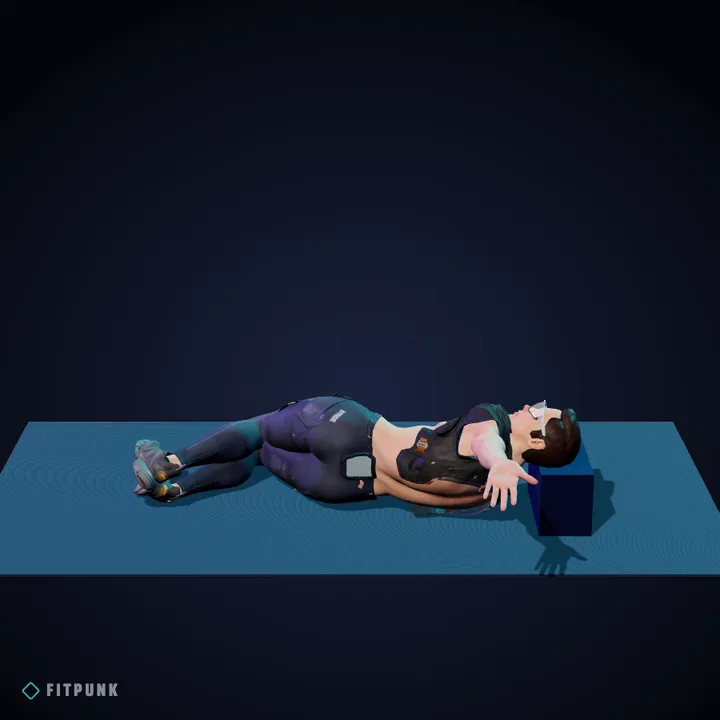
Routines with this move
Questions
What does thread the needle stretch?
It stretches the back of the shoulder of the arm that threads under, and the muscles between your shoulder blades on that side. It also turns your upper back, the part of your spine that does most of your turning.
Should I hold thread the needle or move in and out?
Either works. Moving in and out slowly warms your upper back up; holding for a few breaths at the end gives your shoulder a longer stretch.
Is thread the needle good for a stiff upper back?
It's one of the most common ways to get a stiff upper back turning again, and many people find it feels good after a day of sitting. Move slowly and only as far as is comfortable.
Sources
Do it in Fitpunk.
Your coach puts moves like this into short sessions at home, and every session you finish earns points that light up a city. Fitpunk is coming soon to iPhone.
Join the waitlist